Showing posts with label Agriculture. Show all posts

Anne Gaud Tinker


December 14, 2022. 

Anne Gaud Tinker (VC '67) discusses the book she co-authored with Dwight McInvaill and Caroline Palmer, Alice: Alice Ravenel Huger Smith, Charleston Renaissance Artist, published in 2021 in Charleston by the Middleton Place Foundation and Evening Post Books.


A lifelong Charleston resident with limited professional training, Alice Smith forged her style from a wide range of sources—her French teacher at the local Carolina Art Association, mentors who introduced her to Tonalism and Japanese woodblock prints, and extensive fieldwork. In a career of sixty years, she defied gender expectations and gained national acclaim.

Descended from prominent rice planters, Alice’s work reflects a reverence for nature and nostalgia for an idealized past. She helped spark Charleston’s historic preservation movement, depicted the waning days of rice planting, and captured the mystical spirit of the Lowcountry’s coast, marshes, and woodlands in luminous watercolors.

Alice was one of the principal guiding lights of an invigorating cultural change that flourished between the twentieth century’s two world wars called the Charleston Renaissance. In recent years, this artistic and cultural movement has been reexamined for its elitist perspective and romanticized view of Charleston and the city’s fraught history. Alice’s story raises important questions about historical memory and the forces that shaped Charleston into the city it is today.


Middleton Place Museum Shop Books


Listen

Aaron Sinift, Kahkashan Khan, Jitendra Kumar


December 8, 2021.

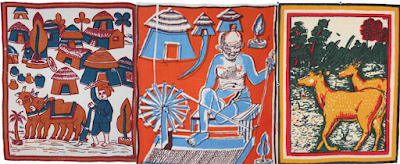
The Artist Aaron Sinift and project co-curators Kahkashan Khan and Jitendra Kumar discuss the artist book featured in the exhibition "OTHER IMAGININGS: Artist Collaborations with Gandhi Ashrams" on view in the Vassar College Art Library through March 4, 2022.

As western modes of advertising and television began to be adopted in India on a mass level in the early ’90s, there was a shift towards a generic global style in popular culture. The uniquely S. Asian styles of portrayal which flourished in the pre-digital era began to disappear as the imagination began to be more aggressively colonized. As vestiges of Gandhi ashram visual culture become rarer in public it is evident that we are nearing the end of a particular visual era that helped define a unique sense of Gandhian social purpose and national identity as popularly understood after Indian Independence.
 
The images in this book are traces of a world that exists even today and continues to provide a baseline means of self-sufficiency for tens of millions of people. Yet how we express ourselves is being transformed by our present circumstances and at this very moment is searching for its compelling voice. Perhaps this book is an opportunity to catch a glimpse before it’s gone of a more local sensibility that is unimpressed by glamour and worldliness, more focused on the ideals of communal harmony and love of country, particularly its rural pastoralist culture, what Gandhiji called “India’s heart and soul.”
 
As we reflect on these unique qualities (rasa), it is important as well to consider the present, the point from which we encounter the future, and from which we must find our voice. OTHER IMAGININGS is intended to create community (you included) and assert absolute equivalence among all participants so that no labor, no effort, no artist known or unknown is prized above any other. This artwork is an attempt to weave together stories rooted in community in order to create a primal resource for understanding and collaboration.

Listen