Showing posts with label Medieval Studies. Show all posts

Julia Bolton Holloway


February 2, 2022.

The scholar, librarian, and Catholic Hermit Julia Bolton Holloway, Custodian of the English Cemetery in Florence, talks about her scholarship, her role as keeper of an historic cemetery, about cemeteries and libraries as vital mirrors of memory, and her project to develop a cultural heritage library documenting the Cemetery's many notable residents and their histories. 

"Julia Bolton Holloway was born in London, grew up in Sussex, went to America at 16, studied at San Jose State University for the BA, and at the University of California, Berkeley, for the doctorate. Her Comparative Literature dissertation was published in three editions as The Pilgrim and the Book: A Study of Dante, Langland and Chaucer. She next published books on Brunetto Latino, a bibliography and an edition of Il Tesoretto, later a full length study of his life and writings as Twice Told Tales: Brunetto Latino and Dante Alighieri, and is currently editing Brunetto Latino's Latin and Italian Opera.  She edited and translated Birgitta of Sweden's Revelations, in Saint Bride and her Book. That work led to research on Julian of Norwich, resulting in the definitive edition of the extant manuscripts in France and England with Sister Anna Maria Reynolds, C.P., and published by SISMEL, Anchoress and Cardinal: Julian of Norwich and Adam Easton, O.S.B., published by Analecta Cartusiana, ed. James Hogg, Julian among the Books: Julian of Norwich's Theological Library, Cambridge Scholars Publishing, and Mary's Dowry: Contemplative and Pilgrim Women's Writings, Analecta Cartusiana, ed. James Hogg. She completed her father's work on Elizabeth Barrett Browning and published editions of Aurora Leigh and Other Poems, Penguin, and Casa Guidi Windows (in English and Italian), Aureo Anello Books. She raised three sons, taught at Quincy University, Princeton University, and the University of Colorado at Boulder, where she was Director of Medieval Studies. She took early retirement to enter an Anglican convent, is now a Catholic hermit in Florence, Italy, where she directs an ecumenical polyglot library and is custodian of the Swiss-owned 'English' Cemetery where Elizabeth Barrett Browning, Walter Savage Landor, Frances Trollope and many famous others, particularly slavery Abolitionists, are buried."

Listen

Celebrating Dante at Vassar

October 27, 2021.

Nancy Bisaha, Simona Bondavalli, Alberto Gelmi, Emma Iadanza, Elizabeth Nogrady and Ronald D. Patkus discuss the teaching of Dante at Vassar through the College's history, and the opening of a series of three simultaneous exhibitions  on view through December 4, 2021 in the Thompson Memorial Library and the Frances Lehman Loeb Art Center under the collective title Celebrating Dante at Vassar, commemorating the 700th anniversary of Dante Aligheri's death on September 14, 1321. 

"Celebrating Dante at Vassar represents one way that the college is taking part in Dante activities this year. It is not meant to be a comprehensive study of interactions with Dante at the college; instead it aims to present essays that investigate key moments and aspects, written from several perspectives. Simona Bondavalli discusses the Dante Pilgrimage of 1921 and the early history of teaching Italian. Nancy Bisaha reflects on the interest in Dante among historians at Vassar and beyond. Ron Patkus presents highlights of the rare book collection in the Archives & Special Collections Library that relate to Dante, and Elizabeth Nogrady shares some resources in the Frances Lehman Loeb Art Center." -- Andrew Ashton, Director of Libraries, Vassar College

Listen

Lindsay Shepherd Cook


May 20, 2020.

Lindsay Shepherd Cook (VC'10), Visiting Assistant Professor of Art at Vassar College, returns to discuss her English translation of a new monograph by former Vassar Professor of Art Andrew Tallon and Dany Sandron, University Professor at the University of the Sorbonne, entitled Notre Dame Cathedral: Nine Centuries of History(Penn State, 2020).

Since its construction, Notre Dame Cathedral has played a central role in French cultural identity. In the wake of the tragic fire of 2019, questions of how to restore the fabric of this quintessential French monument are once more at the forefront. This all-too-prescient book, first published in French in 2013, takes a central place in the conversation.
The Gothic cathedral par excellence, Notre Dame set the architectural bar in the competitive years of the third quarter of the twelfth century and dazzled the architects and aesthetes of the Enlightenment with its structural ingenuity. In the nineteenth century, the cathedral became the touchstone of a movement to restore medieval patrimony to its rightful place at the cultural heart of France: it was transformed into a colossal laboratory in which architects Jean-Baptiste Lassus and Eugène-Emmanuel Viollet-le-Duc anatomized structures, dismembered them, put them back, or built them anew—all the while documenting their work with scientific precision.
Taking as their point of departure a three-dimensional laser scan of the cathedral created in 2010, architectural historians Dany Sandron and the late Andrew Tallon tell the story of the construction and reconstruction of Notre Dame in visual terms. With over a billion points of data, the scan supplies a highly accurate spatial map of the building, which is anatomized and rebuilt virtually. Fourteen double-page images represent the cathedral at specific points in time, while the accompanying text sets out the history of the building, addressing key topics such as the fundraising campaign, the construction of the vaults, and the liturgical function of the choir.
Featuring 170 full-color illustrations and elegantly translated by Lindsay Cook, Notre Dame Cathedral is an enlightening history of one of the world’s most treasured architectural achievements.

Joan M. Ferrante and Robert W. Hanning


February 13, 2019.

Joan M. Ferrante and Robert W. Hanning, distinguished scholars who have long collaborated in translations and scholarship in comparative literature at Columbia University, discuss their new translation of the medieval roman d’antiquité, The Romance of Thebes (The French of England Translation Series: 11; Arizona Center for Medieval and Renaissance Studies, 2018).

"The romans d’antiquité, medieval re-makings in French of the stories of Troy, Thebes, Greece, and Rome, first appeared in the reign of Henry II and Eleanor of Aquitaine in the twelfth century and continued to be read in England throughout the Middle Ages. Among them, the Romance of Thebes medievalizes the stories of Oedipus and Jocasta; Polynices and Etiocles; Antigone, Creon, and Theseus; and the Siege of Thebes. The medieval French re-working also complicates Trojan-based accounts of European identity by adding African and Muslim allies for Thebes to the narrative’s classical source in Statius’ Thebaid, thus suggesting that Europe is not forged simply in opposition to Islam.

"This new translation and introduction by two distinguished scholars of comparative literature is the first in English for thirty years. It is based on the late fourteenth-century manuscript text owned by ‘battling’ Bishop Henry Despenser, notorious for his harsh suppression of the 1381 rebels in Norwich and for his failed continental crusade. The translation can be read both for itself and to facilitate study of the original poem by scholars and students of the literary culture of England and North West Europe."


British Library record for the Manuscript: London, BL Additional 34114.

Joan M. Ferrante's Epistolae: Medeval Women's Letters (discussed in the interview).

Olga Bush


January 30, 2019.

Olga Bush, Visiting Associate Professor of Art History at Bard College, discusses her book: Reframing the Alhambra: Architecture, Poetry, Textiles, and Court Ceremonial (Edinburgh University Press, 2018). The book was a finalist for the College Art Association's 2019 Charles Rufus Morey Book Award, which "honors an especially distinguished book in the history of art, published in the English language."

"The Nasrid builders of the Alhambra – the best-preserved medieval Muslim palatial city – were so exacting that some of their work could not be fully explained until the invention of fractal geometry. Their design principles have been obscured, however, by the loss of all archival material. This book resolves that impasse by investigating the neglected, interdisciplinary contexts of medieval poetics and optics and through comparative study of Islamic court ceremonials. This reframing enables the reconstruction of the underlying, integrated aesthetic, focusing on the harmonious interrelationship between diverse artistic media – architecture, poetry and textiles – in the experience of the beholder, resulting in a new understanding of the Alhambra."

Thomas Edward Hill

Tina Barney (American, (b.1945) The Librarian, 2010, Chromogenic color print © Tina Barney Courtesy of the artist and Janet Borden, Inc.
October 10, 2018.

In this installment of our series on the value of the liberal arts in contemporary society, Milly Budny (VC'71), Founding Director of the Research Group on Manuscript Evidence, turns the table to interview Library Cafe host and Vassar College Art Librarian Thomas Hill about the Library Cafe, his career as a librarian at Yale University and Vassar College, and his background and views on subjects that include the connection between education and friendship, and how library education and practice might be better integrated into academic research and culture.

Part 1:
Listen

Katherine Mangiardi (b. 1982). Kerchief, 2018. Acrylic on board, 12.7 x 12.7 cm.
October 17, 2018.

Part 2:     
Listen

Meredith J. Gill

March 28, 2018.

Meredith J. Gill, Professor of 15th and 16th Century Italian Art at the University of Maryland, talks about her latest book Angels and the Order of Heaven in Medieval and Renaissance Italy (Cambridge, 2014).
 (Cambridge 2014).

"In this beautifully written and deeply thoughtful book, Meredith Gill, one of the best scholars working in the field of medieval and Renaissance art history, tackles a highly compelling subject that has been “hidden in plain sight.” It considers the difference between medieval and Renaissance angelology, offering close readings of angels in the literary tradition and the visual arts (such as Guariento, Melozzo da Forlì, Raphael, and Rosso). It explores angels’ relationship to the immaterial, as graceful bodies imbued with aria, and their meaning in the history of devotion and philosophy. Gill’s writing style is in harmony with her topic, and her deeply engaging prose never fails to transport the reader into its beauty and mystery. Drawing upon earlier excellent work on St Augustine, Gill’s extensive but lightly worn knowledge of Christian thought—a rare achievement amongst art historians today—lays the foundation for every chapter. The book is an essential read not only for art historians, but for anyone with an interest in medieval and Renaissance Christianity."   --Kathleen Christian, The Open University


Listen

Brent Sverdloff

April 12, 2017.

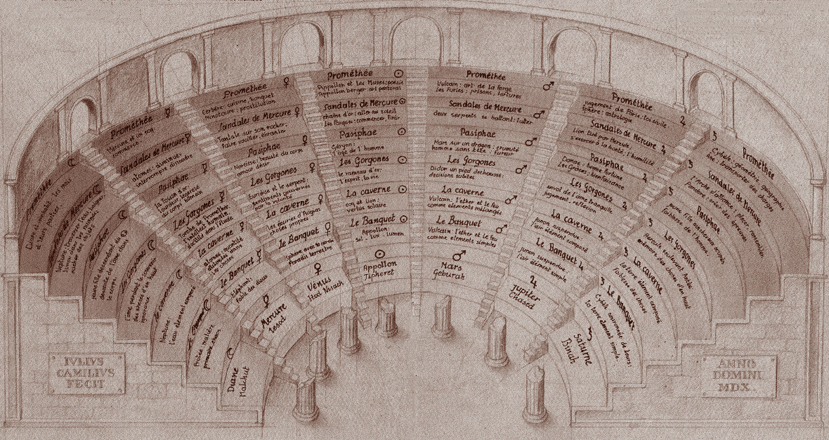
Brent Sverdloff, memory coach and author of How Could I Forget You: A Creative Way to Remember Names and Faces, talks about the ancient art of training your memory to help you better remember people, names, and information for academic examinations.

"When you are ready to admit that you need help remembering names and faces, this book is the place to start. Using playful methods based on how our minds generate information, Sverdloff shows us how we can get our brains back in gear." —Timothy Young,  The Yale Review

49:57 minutes.


Mildred Budny


October 12, 1016.

Mildred Budny (VC'71),  a Princeton-based medievalist, iconographer, scholarly impresario, and editor extraordinaire of the monumental Insular, Anglo-Saxon, and Early Anglo-Norman Manuscript Art at Corpus Christi College, Cambridge: An Illustrated Catalogue, talks about her life with manuscripts, interdisciplinary scholarship, the uses of a Vassar education, and her organization, the Research group on Manuscript Evidence and its programs and publications.

Account of the interview by Mildred, with images of mss we discussed.

60:49 minutes (broadcast version)   Listen

71:34 minutes (full interview)  Listen

Radha Pandey

April 20, 2016.

Book artist and papermaker Radha Pandey discusses her artist's books, traditional artisinal papermaking, and the history of papermaking on the Indian subcontinent.

32:52 minutes.

Listen

Marc Michael Epstein


 September 16, 2015. (SEASON OPENER)

Mark Michael Epstein,  Professor of Religion on the Mackie Paschall Davis & Norman H. Davis Chair at Vassar College, discusses his new book, co-edited with Eva Frojmovic: Skies of Parchment, Seas of Ink: Jewish Illuminated Manuscripts (Princeton University Press, 2015).

“The gorgeously illustrated volume ... should challenge almost all assumptions about Jewish identity, difference, or art. Its twelve instructive chapters and 287 full-color images survey a stunning array of illustrated books made for Jews from the twelfth to the twenty-first centuries."  -- Sara Lipton, New York Review of Books

46:26 minutes

Listen

Alix Christie

February 18, 2015.  

Writer, journalist, and printer Alix Christie, (VC'80) talks about her historical novel, Gutenberg's Apprentice (Harper Collins, 2014).


"If ever there were a historical novel with up-to-the-minute resonance, this is it. As we go through another information revolution, Christie’s novel takes us back in brilliantly-observed detail to the first – the invention of the printing press. Her characters are engaging, the world as beautifully crafted as one of Gutenberg’s hot-metal letters, and the themes more relevant now than ever."


51:42 minutes

Listen

Jeffrey T. Schnapp


February 4, 2015.

Harvard cultural historian and media theorist Jeffrey T. Schnapp (VC'75), Co-director of the Berkman Center for the Internet and Society and founding Faculty Director of the Harvard Graduate School of Design's knowledge design studio metaLAB, talks about his new book, co-authored with Matthew Battles, entitled The Library Beyond the Book (Harvard, 2014), as well as about the Library Test Kitchen and experiments in library interfaces for the digital age.  


"With textbook readers and digital downloads proliferating, it is easy to imagine a time when printed books will vanish. Such forecasts miss the mark, argue Jeffrey Schnapp and Matthew Battles. Future bookshelves will not be wholly virtual, and libraries will thrive, although in a variety of new social, cultural, and architectural forms. Schnapp and Battles combine deep study of the library's history with a record of institutional and technical innovation at metaLAB, a research group at the forefront of the digital humanities. They gather these currents in The Library Beyond the Book, exploring what libraries have been in the past to speculate on what they will become: hybrid places that intermingle books and ebooks, analog and digital formats, paper and pixels."

56.34 minutes.

Listen 

Adina Hoffman & Peter Cole


February 6, 2013.

Adina Hoffman and Peter Cole talk about their book Sacred Trash: The Lost and Found World of the Cairo Geniza, published in 2011 by Schocken.

Adina Hoffman is the author of House of Windows: Portraits from a Jerusalem Neighborhood and My Happiness Bears No Relation to Happiness: A Poet’s Life in the Palestinian Century, which was named one of the best twenty books of 2009 by the Barnes & Noble Review and one of the top ten biographies of the year by Booklist.

Peter Cole’s most recent book of poetry is Things on Which I’ve Stumbled—whose title poem revolves around the Cairo Geniza. Cole’s translations from Hebrew and Arabic include War & Love, Love & War: New and Selected Poems by Aharon Shabtai; So What: New & Selected Poems by Taha Muhammad Ali; and The Dream of the Poem: Hebrew Poetry from Muslim and Christian Spain, 950-1492, which received the National Jewish Book Award in Poetry and the American Association of Publishers’ 2008 Hawkins Award for the university press book of the year.

61:04 mins.

Listen

Marc Michael Epstein

October 10, 2012.

Marc Michael Epstein,  Professor of Religion at Vassar College, talks about his book: The Medieval Haggadah: Art, Narrative, and Religious Imagination, published by Yale University Press and listed by the Times Literary Supplement as one of the best books of 2011.

“A dazzling analysis. . . . The Medieval Haggadah shows with remarkable sophistication and an acute visual sense how those who commissioned, produced the blueprint for, and illuminated four medieval haggadot, or books for use at the Passover ceremony, did much more than illustrate the story of the Exodus, creating, rather, complex statements about the role and place of Jews in the society of the time, as well as producing remarkable works of art."— Gabriel Josipovici, The Times Literary Supplement (Books of the Year)

41:06 min.

Listen

Nancy Bisaha

March 4, 2008.

Nancy Bisaha, professor of history at Vassar College, talks about her book, Creating East and West: Renaissance Humanists and the Ottoman Turks, which "underscores the importance of this period for the evolution of concepts such as East and West, Europe and Asia, and suggests how these Renaissance views ... may still inform the modern discourse on Islam and the West." - RQ

50:10 min.

Listen

Mark C. Amodio

December 11, 2007.

Mark Amodio, Professor of English at Vassar College, talks about his book: Writing the Oral Tradition: Poetics and Literate Culture in Medieval England, published by the University of Notre Dame Press. Hailed as "a major revision of oral theory" and "destined to reshape critical thinking about medieval poetry in English," Writing the Oral Tradition was selected as a Choice Outstanding Academic Book for 2005.

60:01 min.
Listen