Showing posts with label Rhetoric. Show all posts
Joan M. Ferrante and Robert W. Hanning
February 13, 2019.
Joan M. Ferrante and Robert W. Hanning, distinguished scholars who have long collaborated in translations and scholarship in comparative literature at Columbia University, discuss their new translation of the medieval roman d’antiquité, The Romance of Thebes (The French of England Translation Series: 11; Arizona Center for Medieval and Renaissance Studies, 2018).
"The romans d’antiquité, medieval re-makings in French of the stories of Troy, Thebes, Greece, and Rome, first appeared in the reign of Henry II and Eleanor of Aquitaine in the twelfth century and continued to be read in England throughout the Middle Ages. Among them, the Romance of Thebes medievalizes the stories of Oedipus and Jocasta; Polynices and Etiocles; Antigone, Creon, and Theseus; and the Siege of Thebes. The medieval French re-working also complicates Trojan-based accounts of European identity by adding African and Muslim allies for Thebes to the narrative’s classical source in Statius’ Thebaid, thus suggesting that Europe is not forged simply in opposition to Islam.
"This new translation and introduction by two distinguished scholars of comparative literature is the first in English for thirty years. It is based on the late fourteenth-century manuscript text owned by ‘battling’ Bishop Henry Despenser, notorious for his harsh suppression of the 1381 rebels in Norwich and for his failed continental crusade. The translation can be read both for itself and to facilitate study of the original poem by scholars and students of the literary culture of England and North West Europe."
British Library record for the Manuscript: London, BL Additional 34114.
Joan M. Ferrante's Epistolae: Medeval Women's Letters (discussed in the interview).
Olga Bush
Olga Bush, Visiting Associate Professor of Art History at Bard College, discusses her book: Reframing the Alhambra: Architecture, Poetry, Textiles, and Court Ceremonial (Edinburgh University Press, 2018). The book was a finalist for the College Art Association's 2019 Charles Rufus Morey Book Award, which "honors an especially distinguished book in the history of art, published in the English language."
"The Nasrid builders of the Alhambra – the best-preserved medieval Muslim palatial city – were so exacting that some of their work could not be fully explained until the invention of fractal geometry. Their design principles have been obscured, however, by the loss of all archival material. This book resolves that impasse by investigating the neglected, interdisciplinary contexts of medieval poetics and optics and through comparative study of Islamic court ceremonials. This reframing enables the reconstruction of the underlying, integrated aesthetic, focusing on the harmonious interrelationship between diverse artistic media – architecture, poetry and textiles – in the experience of the beholder, resulting in a new understanding of the Alhambra."
James Merrell
![]() |
| Violet Oakley. "Quaker Legend of the Latch String" Mural for the Pennsylvania State House, 1919. |
May 16, 2018.
Season Finale: James Merrell, Professor of History at Vassar College on the Lucy Maynard Salmon Chair, talks about historical vocabulary and his article "Second Thoughts on Colonial Historians and American Indians" (William and Mary Quarterly July 2012), as well as his two monographs The Indians' New World: Catawbas and Their Neighbors from European Contact through the Era of Removal (North Carolina, 1989) and Into the American Woods: Negotiators on the Pennsylvania Frontier(Norton, 1999), both winners of the Bancroft Prize.
"This stunning history of the Catawbas―and their black and white neighbors―sets a new standard for the field. Merrell's book bristles with new insights and skilled decoding of difficult evidence. After reading this book, all those involved in teaching early American history should want to alter their perspective." ―Gary B. Nash, University of California, Los Angeles
"The Indians' New World is closely argued from an astonishing amount of evidence, and it is lucidly written.... It emphasizes the ingenuity and strength of will by which the Catawbas coped with disaster and preserved their identity as a people. Only a genuine scholar and fascinating writer could have paid tribute as James Merrell has done." ―Francis Jennings, Director Emeritus, D'Arey McNickle Center for the History of the American Indian, The Newberry Library
"James Merrell's Into the woods: Negotiators on the Pennsylvania Frontier is an account of the "go-betweens," the Europeans and Indians who moved between cultures on the Pennsylvania frontier in efforts to maintain the peace. It is also a reflection on the meanings of wilderness to the colonists and natives of the New World. From the Quaker colony's founding in the 1680s into the 1750s, Merrell shows us how the go-betweens survived in the woods, dealing with problems of food, travel, lodging, and safety, and how they sought to bridge the vast cultural gaps between the Europeans and the Indians. The futility of these efforts became clear in the sickening plummet into war after 1750. "A stunningly original and exceedingly well-written account of diplomacy on the edge of the Pennsylvania wilderness."-- Listen
Brent Sverdloff
April 12, 2017.
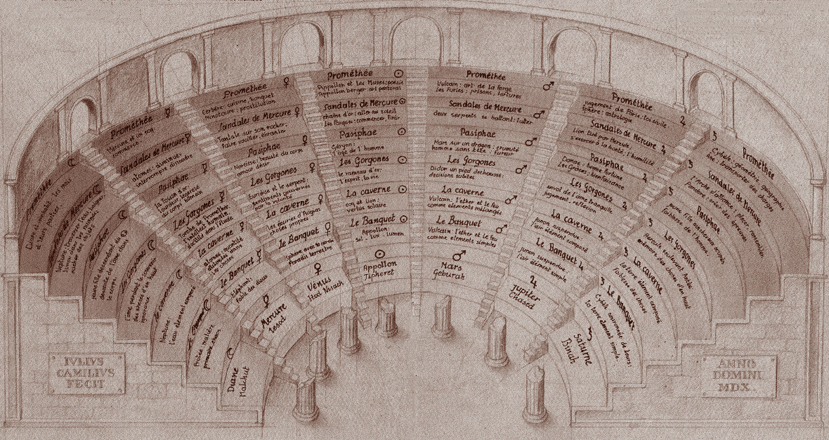
Brent Sverdloff, memory coach and author of How Could I Forget You: A Creative Way to Remember Names and Faces, talks about the ancient art of training your memory to help you better remember people, names, and information for academic examinations.
"When you are ready to admit that you need help remembering names and faces, this book is the place to start. Using playful methods based on how our minds generate information, Sverdloff shows us how we can get our brains back in gear." —Timothy Young, The Yale Review
49:57 minutes.
Johanna Drucker
October 29, 2014.
Scholar, artist, printer, and visual theorist Johanna Drucker, Breslauer Professor of Bibliographical Studies at the Graduate School of Education and Information Studies at the University of California, Los Angeles, discusses her book Graphesis: Visual Forms of Knowledge Production (Harvard 2014).
"Information graphics bear tell-tale signs of the disciplines in which they originated: statistics, business, and the empirical sciences. Drucker makes the case for studying visuality from a humanistic perspective, exploring how graphic languages can serve fields where qualitative judgments take priority over quantitative statements of fact. Graphesis offers a new epistemology of the ways we process information, embracing the full potential of visual forms and formats of knowledge production."
48:20 minutes
Listen
Scholar, artist, printer, and visual theorist Johanna Drucker, Breslauer Professor of Bibliographical Studies at the Graduate School of Education and Information Studies at the University of California, Los Angeles, discusses her book Graphesis: Visual Forms of Knowledge Production (Harvard 2014).
"Information graphics bear tell-tale signs of the disciplines in which they originated: statistics, business, and the empirical sciences. Drucker makes the case for studying visuality from a humanistic perspective, exploring how graphic languages can serve fields where qualitative judgments take priority over quantitative statements of fact. Graphesis offers a new epistemology of the ways we process information, embracing the full potential of visual forms and formats of knowledge production."
48:20 minutes
Listen
Subscribe to:
Posts (Atom)