Showing posts with label Printmaking. Show all posts

Anne Gaud Tinker


December 14, 2022. 

Anne Gaud Tinker (VC '67) discusses the book she co-authored with Dwight McInvaill and Caroline Palmer, Alice: Alice Ravenel Huger Smith, Charleston Renaissance Artist, published in 2021 in Charleston by the Middleton Place Foundation and Evening Post Books.


A lifelong Charleston resident with limited professional training, Alice Smith forged her style from a wide range of sources—her French teacher at the local Carolina Art Association, mentors who introduced her to Tonalism and Japanese woodblock prints, and extensive fieldwork. In a career of sixty years, she defied gender expectations and gained national acclaim.

Descended from prominent rice planters, Alice’s work reflects a reverence for nature and nostalgia for an idealized past. She helped spark Charleston’s historic preservation movement, depicted the waning days of rice planting, and captured the mystical spirit of the Lowcountry’s coast, marshes, and woodlands in luminous watercolors.

Alice was one of the principal guiding lights of an invigorating cultural change that flourished between the twentieth century’s two world wars called the Charleston Renaissance. In recent years, this artistic and cultural movement has been reexamined for its elitist perspective and romanticized view of Charleston and the city’s fraught history. Alice’s story raises important questions about historical memory and the forces that shaped Charleston into the city it is today.


Middleton Place Museum Shop Books


Listen

Jessica D. Brier


September 21, 2022.

Jessica D. Brier, Deknatel Curatorial Fellow in Photography at the Frances Lehman Loeb Art Center at Vassar College, talks about her exhibition and takes us on a tour through the galleries of On the Grid: Ways of Seeing in Print, on view at the Center from August 20 through December 22, 2022.

The grid often hides in plain sight, from notepads and spreadsheets to halftone photographic reproductions. It dominates the organization, perception, and representation of the modern world, especially in print. Deeply embedded in a Western worldview, the grid visualizes control, mastery, and order. As an invisible framing device, it has become so pervasive that we habitually ignore it. Yet when artists call our attention to the grid, its layered meanings come fully into view. On the Grid: Ways of Seeing in Print surveys photographs, prints, artist’s books, and printed sculptures from the dynamic permanent collection of the Frances Lehman Loeb Art Center at Vassar College. From 19th-century scientific and portrait photography to avant-garde and conceptual photography; from mid- 20th-century Minimalist, Pop Art, and Op Art printmaking to experimental bookmaking and photography in the 21st century, this richly illustrated volume explores how artists have embraced, rejected, and reclaimed the grid. By altering and challenging perception, they offer new ways of seeing the world. 


Listen

Changing Forms

Willem van Meiris, Portrait of Dina Margareta de Bye, 1705 o/c, The Leiden Collection, New York

November 17, 2021.

Elizabeth Nogrady (VC'99), Andrew W. Mellon Curator of Academic Programs at the Frances Lehman Loeb Art Center at Vassar, Lara Yeager-Crasselt (VC'06) Curator of The Leiden Collection, and Ronald Patkus,  Associate Director of the Libraries for Special Collections and Associate Professor of History at Vassar on the Frederic Weyerhauser Chair, discuss the exhibition on view at the Frances Lehman Loeb Art Center entitled Changing Forms: Metamorphosis in Myth, Art, and Nature 1650-1700, on view September 28 - December 19, 2021 at the Frances Lehman Loeb Art Center.

This Focus Gallery exhibition explores the rich concept of metamorphosis—with links to art, myth, science, and the exchange of knowledge—in the late seventeenth-century Netherlands. The paintings, drawings, prints, and illustrated books on view include artists’ renderings of Ovid’s Metamorphoses from around 1600 by Virgil Solis, Abraham Bloemaert, and Hendrick Goudt. This tradition contributed to a dynamic moment later in the 1600s, when painters such as Godefridus Schalcken, Willem van Mieris, and Samuel van Hoogstraten created their own mythological imagery. Meanwhile, the book market for Ovid kept pace and contemporaries explored biological metamorphosis in lavishly illustrated insect studies like those by Johannes Goedaert, Jan Swammerdam, and Maria Sibylla Merian. Works in the exhibition come from Vassar collections and include significant loans from Cornell University, Bard College, Lehigh University, and The Leiden Collection—the preeminent private collection of Dutch art in the United States.

Robert Kipniss


SEASON OPENER September 15, 2021.

The painter, printmaker, and writer Robert Kipniss talks about his memoir Robert Kipniss: A Working Artist's Life (University Press of New England, 2011).

"A painter's life is a solitary one, alone in the studio, combining intelligence and imagination with technical skills to create a unique vision. Robert Kipniss's elegiac and mysterious landscapes and still lifes convey none of this process of invention. Few great painters are great writers, but Kipniss is an exception. In his sensitive and personal memoir we discover his passionate struggle to achieve his artistic goals, balancing the obligations of his personal life with the great demands of his art."  -- E.John Bullard, Director Emeritus, New Orleans Museum of Art

Robert Kipniss’s A Working Artist’s Life is the rarest of literary achievements: a personal memoir, cultural history, and textbook of craft and market. I was enlightened, entertained, and frequently moved by this portrait of the artist composed with a touch of the poet.” -- Sidney Offit, author of Memoir of the Bookie’s Son; curator emeritus, George Polk Journalism Awards; and president, Authors Guild Foundation.

"Kipniss’ compulsion to express and communicate what he sees carries him over the decades through economic hardship and added instances of the occasional cruelties of the world to further successes with the New York gallery establishment, through marriage and fatherhood, a stint in the army, and later in life through his further creative development as a consummate printmaker and to his present life with his second wife, the author Laurie Lisle. This is recounted in the book with an informative and clear-eyed recollection, often tinged with irony, in the urbane and genial voice of a human being who has, within the precincts of the city that fostered and challenged him, molded himself into a profoundly eloquent, perceptive, and charismatic individual. As a visual artist and poet whose art might be described as the rendering of perceived reality into worlds reflected on the surface of a tranquil and attentive eye, Kipniss’ mindful recollection of a life in which nothing is held back introduces us in this book to his path to a visionary and intelligent apprehension of the whole of the world that dreams of itself through our senses." -- T. E. Hill, Vassar College.

Listen

Patricia Phagan

Hilda Belcher (American, 1881–1963). The Checkered Dress (Portrait of O’Keeffe), 1907, watercolor and gouache. Frances Lehman Loeb Art Center, Vassar College. Bequest of Mary S. Bedell, class of 1873, 1932.1.5


April 7, 2021.

Patricia Phagan, Philip and Lynn Strauss Curator at the Frances Lehman Loeb Art Center, will discuss her exhibition Women Picturing Women: From Personal Spaces to Public Ventures, on view through June 13, 2021.

"Women Picturing WomenFrom Personal Spaces to Public Ventures studies the key themes that emerged when selecting works by women depicting women. In different media, female artists from the seventeenth century to the 1960s—the eras studied—frequently communicated the idea of an intimate or sheltered enclosure such as a room, studio, or garden, even though these women participated in a more public arena to show or even make their work. In this exhibition from a collection of 22,000 objects, portraits and domestic scenes appeared often, with family, friends, colleagues, models, and oneself playing major roles. Home-centered settings and situations, including views of mothers and children, proliferated from the nineteenth century onwards. Idyllic, invented landscapes, mostly of the here and now, appeared, too, from the late 1700s where female artists placed their women (and sometimes men) in a harmonious or even fantastic natural world. On the other hand, some female artists relayed the idea of venturing into an outright public place such as a street or an office, or into the more public, intellectual world of a narrative found in religion, history, or social critique. These images appeared less often, while documentary photography spurred a veritable movement among women artists in the twentieth century."

Link to a virtual 3-d tour of the exhibition  here.

Laurie Lisle


Louise Nevelson with her cats, 1975, Pedro E. Guerrero, Vintage Silver Bromide Print
March 25, 2020.

Author and biographer Laurie Lisle discusses her book Louise Nevelson: A Passionate Life (Simon & Schuster 1990; Rev. Ed., Open Road, 2016.)

'From her birth in Russia, her girlhood in Maine, to her years as an artist in Manhattan, Nevelson's life was difficult, dramatic and, after years of struggle, finally triumphant. Her rich iconography expressed in black, white, and gold wooden assemblages is an enormous and extraordinary prize-winning body of work found in parks, plazas, and museums throughout the world. Lisle has conscientiously investigated the numerous bizarre events in Nevelson's long life" -Washington Post Book World 

"Lisle's book is impressive in its thoroughness . . . its eclectic introduction of psychological analysis" -Woman's Art Journal


Listen

Patricia Phagan


February 12, 2020.
Frances Lehman Loeb Art Center curator Patricia Phagan talks about the exhibition Louise Bourgeois: Ode to Forgetting, From the Collections of Jordan D. Schnitzer and His Family Foundation, on view January 24 - April 5, 2020.

Louise Bourgeois (1911–2010) is one of the most renowned artists of the twentieth and twenty- first centuries. She is perhaps best known for powerful sculptures, including monumental spiders, human figures, and anthropomorphic shapes. An enigmatic chronicler of her emotions, she confided in her diaries, made drawings daily, and returned regularly to printmaking. The exhibition focuses on prints she made in her eighties and nineties, with a few earlier examples and a massive spiral sculpture to give additional context. She made art because she had to, and described her practice as a means of survival, a lifelong managing of emotional vulnerabilities, traumas, and nightmares. As she put it, “Art is a guarantee of sanity.”


Mary-Kay Lombino

February 7, 2017.

Mary-Kay Lombino, Emily Hargroves Fisher 1957 and Richard B. Fisher Curator of Collections at the Frances Lehman Loeb Art Center, discusses the exhibition on view January 29 - April 15, 2018: "People Are Beautiful, Photographs, Prints, and Films by Andy Warhol."

People are Beautiful explores shifting notions of beauty in Warhol’s portraits, with a focus on such themes as Celebrity and Stardom; The Artist–Patron Relationship; Fashion, Models, and the Party Scene; and The “Most Beautiful” Screen Tests. The Frances Lehman Loeb Art Center is part of a consortium of five academic museums in the Hudson Valley each hosting thematic exhibitions of Warhol’s art in 2018. The group of exhibitions, collectively titled Warhol x 5, will feature works lent from the collections of the participating institutions.


Patricia Phagan

November 15, 2017

Patricia Phagan, Philip and Lynn Strauss Curator of Prints and Drawings at the Frances Lehman Loeb Art Center, talks about the exhibition "Fluid Expressions: The Prints of Helen Frankenthaler from the Collections of Gordon D. Schnitzer and His Family Foundations," on view at the Center through December 10, 2017.
"Widely known for her iconic “soak-stain” canvases, acclaimed artist Helen Frankenthaler (1928–2011) was an equally inventive printmaker who took risks in a medium not frequently explored by abstract expressionists. Fluid Expressions: The Prints of Helen Frankenthaler, from the Collections of Jordan D. Schnitzer and His Family Foundation highlights Frankenthaler’s often-overlooked, yet highly original print production. The exhibition will be making its only northeast stop at Vassar College’s Frances Lehman Loeb Art Center October 6-December 10, 2017. This exhibition is free and open to the public."


Barbara Beisinghoff

October 5, 2016.

Internationally acclaimed graphic artist Barbara Beisinghoff will talk about her artist's books and etchings, installations and public commissions, her residency at Vassar College during September and October of this year, and her exhibition, "When Light Touches Paper," on view in the Vassar College Art Library and the  Frances Lehman Loeb Art Center September 19 - October 14, 2016.

46:15 minutes.

Listen

Arthur H. Groten


November 18, 2015.

Ephemerist/Philatelist Arthur H.Groton discusses the collection of poster stamps he assembled and recently gifted to Vassar College and the exhibit "Posters in Miniature: The Ephemeral Cinderella" on view in the Vassar College Art Library through December 16.

40:40 minutes.

Listen

Patricia Phagan

November 5, 2014.

Patricia Phagan, Philip and Lynn Straus Curator of Prints and Drawings at the Frances Lehman Loeb Art Center at Vassar, will discuss the exhibition currently on view at the Center through December 14, 2014 entitled: Imperial Augsburg: Renaissance Prints and Drawings, 1475-1540.

"Like Albrecht Dürer’s Nuremberg, the city of Augsburg was vital to the flowering of the Renaissance in Germany. The exhibition features prints, drawings, illustrated books, medals, and armor from Augsburg and addresses the themes of Christian devotion and the Reformation, moral conduct and everyday life, and art made for Holy Roman Emperor Maximilian I."

34:41 minutes.

Patricia Phagan

April 23, 2014.

Patricia Phagan, Philip and Lynn Straus Curator of Prints and Drawings at the Frances Lehman Loeb Art Center at Vassar, will discuss the exhibition currently on view at the Center through June 29, 2014  entitled "Mastering Light: From the Natural to the Artificial."

36:13 minutes.

Listen

Karen Hwang & Patricia Phagan

October 30, 2013.

Karen Hwang, Assistant Professor of Art at Vassar College, and Patricia Phagan, Philip and Lynn Straus Curator of Prints and Drawings at the Frances Lehman Loeb Art Center at Vassar, will discuss the traveling exhibition currently on view at the Center through December 15, 2013  entitled "Genji's World in Japanese Woodblock Prints."

 "The Tale of Genji, written in the eleventh century by the Japanese court lady Murasaki Shikibu, has greatly influenced Japanese culture, from novels and kabuki performances to today’s manga and animé. That influence can be clearly seen in the works in this exhibition, which features a rich array of fifty-seven woodblock prints by many of Japan’s leading eighteenth- and nineteenth-century artists."

39:05 minutes

Listen

Joseph A. Dane

April 10, 2013.

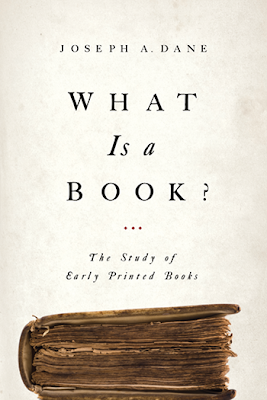
Joseph A. Dane discusses his book, What Is a Book?: The Study of Early Printed Books, Published by the University of Notre Dame Press in 2012.

“Joseph A. Dane is one of our most brilliant and prolific scholars of the early book, and this volume culminates a lifetime of research. For the general reader, it will offer a compelling survey of book history and book making. For the specialist, it will offer insights into the techniques of printers and the lives of collectors. For anyone concerned with how we read the past, and for anyone fascinated by the book as typographical artifact, What Is a Book? will be deeply valued." -- Seth Lehrer, UCSD.


49:56 minutes. 

Listen

Werner Pfeiffer

SEASON OPENER
October 3, 2012.

Artist Werner Pfeiffer talks about the exhibition of his work on view in the Thompson Library, Van Ingen Art Library, and Frances Lehman Loeb Art Center at Vassar College through December 14 entitled: Reexamining Books: Book Objects and Artist Books by Werner Pfeiffer."

59:35 min.

Listen